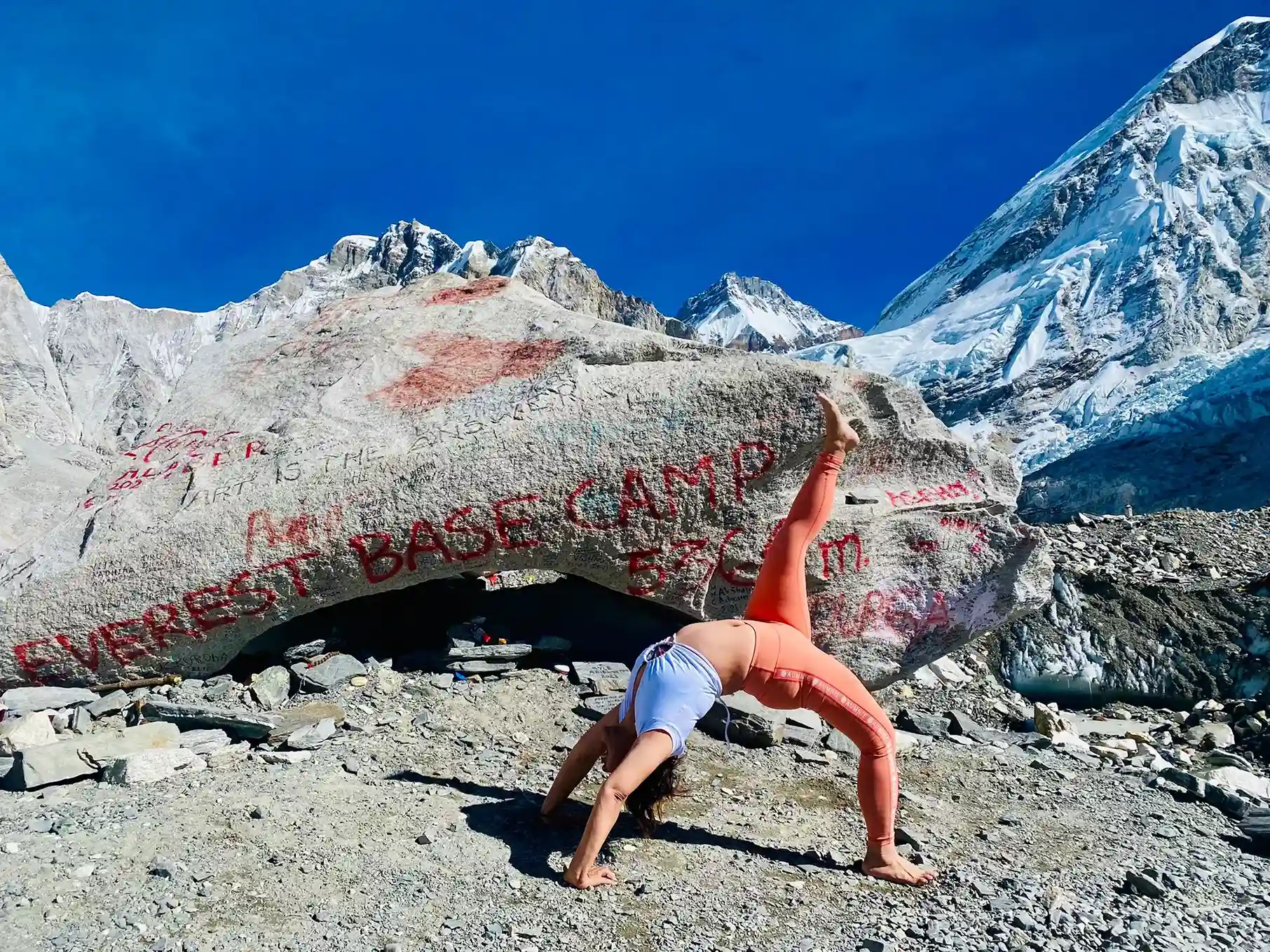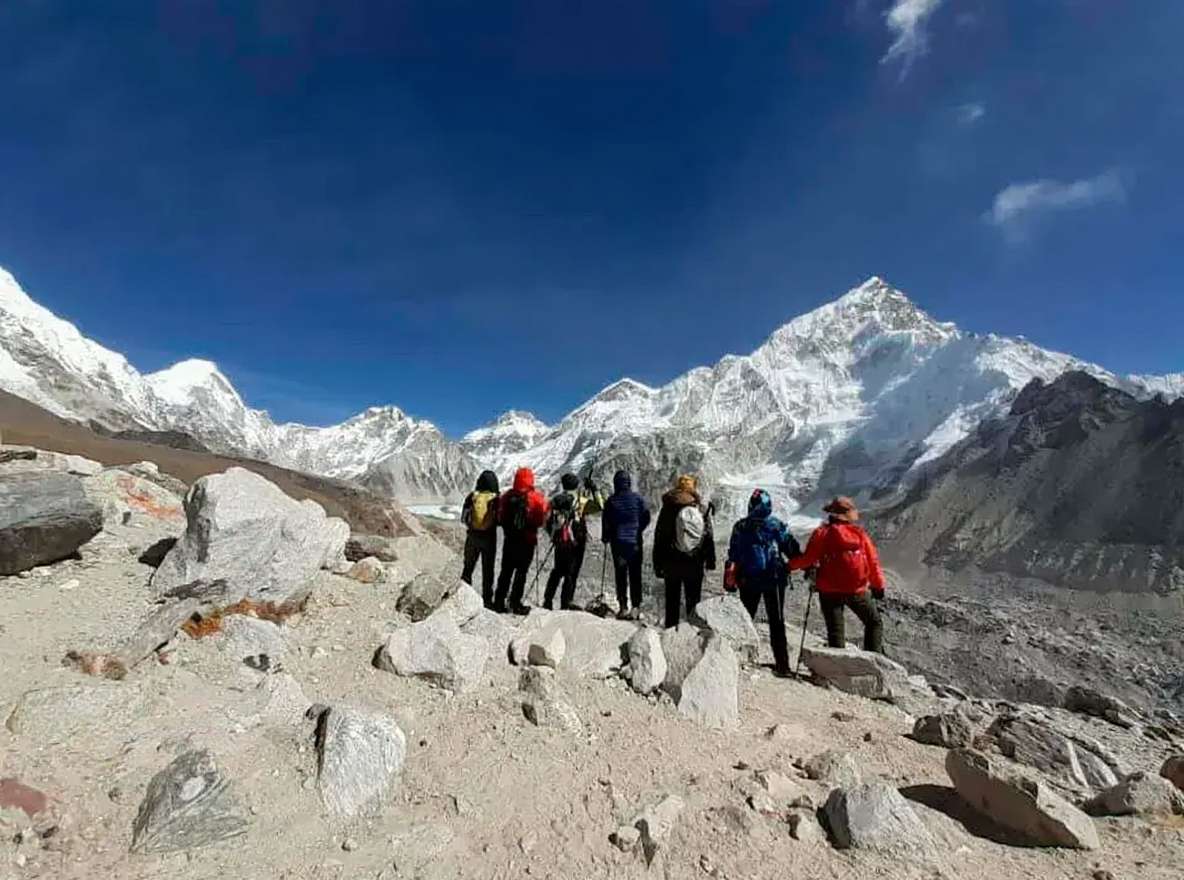


The Everest Base Camp Trek goes up the valley to the west of Everest to the village of Gokyo and five holy lakes on the moraine next to the Ngozumpa Glacier. The Gokyo Valley Trek is a great alternative. This amazing climb is almost as high as the Everest Base Camp Trek and has just as many jaw-dropping views of Everest. The trails are also less crowded and quieter, and traditional Sherpa villages feed hordes of hungry trekkers with local food. The trail goes along the Dudh Koshi River to where it starts, which is a group of green lakes. The Sherpa village of Gokyo is next to the biggest of these lakes. As we go up from Gokyo to Gokyo Ri (5360 m), we can see Everest, Lhotse, Cho Oyu, Makalu, Cholatse, and Taboche. It takes our breath away.
The start of our journey
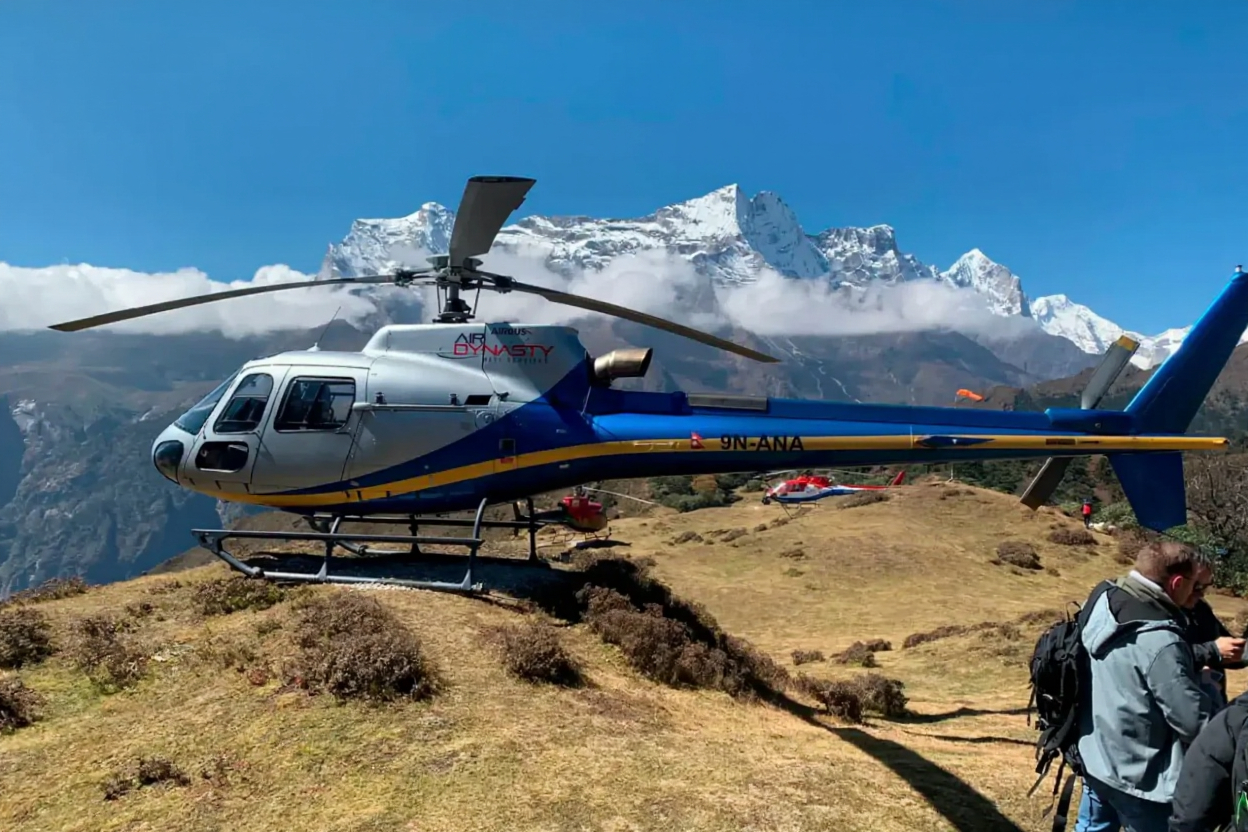
The first part of the Gokyo Valley Trek is a beautiful flight from Kathmandu to Lukla, a small town on top of a hill. A lot of different treks in the Khumbu region begin in Lukla. When you get to Lukla, the start of your trek, go towards Phakding. You can see Mt. Khumbila, which is known as the “God of Khumbu,” along the way. The sacred peak can’t be climbed, so it’s one of the few peaks in the area that hasn’t been done yet. From Phakding, you can travel through a lush wilderness to reach Namche Bazaar, which is the Sherpa capital and the region’s economic hub. After a trip to Namche to get used to the altitude, continue to Phortse Thenga, a village by the river.
After that, you’ll go along the ridge section, which has great views of Cho Oyu, Kangtega, and the valley below. Following the end moraine of the Ngozumpa glacier will lead you to the small village of Machhermo, which is high in the mountains where there are no trees. The next day, you should go to Gokyo. Following river networks with clear glacier water and going through a brown and grey landscape to get to the village of Gokyo.
Going to Gokyo for the day
You will be exploring Gokyo for two days. The next day, go outside and check out the nearby emerald and green lakes. The two lakes are right next to the tea house. It took a short walk to get to the third lake. Next, visit the fourth Gokyo Lake, which is 3 km north of the village of Gokyo. Keep going on your way to the fourth and fifth lakes. Also, go to “Scoundrel’s Viewpoint,” which is on the edge of the fifth lake. From there, you can see the Cho-Oyu, Gyachung Kang, Everest, Lhotse, Nuptse, and Makalu mountains, as well as the huge Ngozumba Glacier in all its glory. Take a walk around the lakes and see other holy lakes during the day.
The next day, you should go to the top of Gokyo Ri, which is 5,360 meters high. The climb isn’t hard, but the high altitude can make things hard, so go slowly. From the Ri, you can see Cho Oyu, Everest, Lhotse, Makalu, Cholatse, and Taboche. In front of you, the Ngozumpa Glacier cuts through the landscape like a huge tear.
After exploring the lakes, go back the way you came to Dole, Namche Bazaar, and then Lukla. Last but not least, take a plane from Lukla to Kathmandu. For people who want a less crowded trail with basic lodge facilities, the Gokyo Valley Trek is perfect. Get to know the Everest region’s rough and wild culture and landscapes. Join the Alpine Club of Himalaya on this walk.
Entry Permits and Requirements:
The Gokyo Valley Trek requires two permits:
- Sagarmatha National Park Entry Permit and
- Khumbu Rural Municipality Entrance Permit.
The Nepal Tourism Boards office in Kathmandu or the park’s entrance gate in Monjo can provide you with Sagarmatha National Park Entry Permit for NRS 3000.
The fee for citizens of SAARC nations is NRS 1500.
You must complete the permit application and present your passport or a copy of your passport. You must be in Lukla to obtain the Khumbu Pasang Lhamu Rural Municipality Entrance Permit. The permission costs NRS 2000 and may be acquired at the rural municipality counter on the outskirts of the settlement.
You will not have to worry about waiting for permits since the Alpine Club of Himalaya or our guides will take care of everything.
Preparation for Gokyo Valley Trek:
In brief, the trail to Gokyo Valley is harsh and brutal with high cliffs and dry mountain terrains which is why trekkers need to be more prepared. Besides, from weather to accommodation and physical fitness, they must take care of everything in advance.
Best Time to Visit?
Autumn and spring are the best times to go trekking in the Everest region. These are September, October, November, March, April, and May.
In the autumn, from September to November, the weather is clear, warm and you can see a lot. It’s easy to get around the area because the weather is mild.
The spring months of March, April, and May are also the best times to visit the Everest region. Spring marks the end of winter and changes the landscape, bringing to life endless rows of different coloured rhododendron, moss, and orchid-draped trees, colourful undergrowth that goes on for miles, and snowy mountain peaks against a background of clear blue skies.
During the monsoon season, the weather is bad for trekking, and it’s hard to get around the country because of all the landslides and floods. Trekkers usually stay away from the monsoon season.
As winter approaches, the area gets a lot of snow, which covers most of the trail. Most parts of Everest are also closed off, so it’s not possible to trek.
Why this tour is Unique?
The Gokyo Valley Trek takes you across the secluded trails of the Khumbu region. Always been a paradise for travelers the trek takes you across woodlands, high mountain grounds, glacier lakes, and mountain laps. Along the trek learn about the culture and traditions of the mountain people and soak in the wonders of the nature.
Travel Insurance:
All clients engaging in any activity must have smart travel insurance or emergency evacuation insurance. Alpine Club of Himalaya highly suggest you to obtain a comprehensive insurance plan from a reliable insurance firm that covers emergency evacuation insurance in high altitudes, personal injury, hospital expenditures, repatriation fees, helicopter rescue, and any other misfortune.
Passport and Visa:
Each client must be issued a valid visa with a six-month validity from the date of return by the Nepalese embassy in your country or the immigration office at Tribhuvan International Airport in Kathmandu.
Meals and drinking water:
Everest Region Trek is one of the most facilitated trekking destinations in the country, providing basic to luxury services.
In this trial, you will be provided with a variety of cuisine to choose from. Nepali, Tibetan, Indian, western as well as continental meals. As the region has small tea houses to luxury hotels the facilities, provided are basic to grandeur according to your budget.
Similarly, drinking water is accessible with natural water supplies which are untreated, so direct use of the water is not recommended, you may refill boiling water or cold filter water from any of the teahouses. However, if you buy a water purification tablet, chlorine drops, or utilize SODIS (sunlight assisted) filtration procedures for further assurance, saving money, and reducing plastic pollution.
Accommodation:
Accommodations are available in trekking lodges, teahouses as well as several hotels all along the trail, providing basic well-maintained, and reasonably luxury 5-star ones with additional needs according to your budget. Tea houses on the trail vary in quality and price, depending on the amenities they feature.
The tea houses room has twin sharing beds and some basic furniture like a table or a chair. Normally, beds contain pillows and sheets and almost all tea houses provide extra blankets as it will be freezing at night. Usually, hot showers are available throughout the trek.
For trekkers who want to Camp, various campsites are available along the trail.
Common Breakfast During the trek:
During the trek, various tea houses provide a wide range of breakfasts. The most common breakfast includes Tibetan Bread (fried bread), Chapati (unleavened flatbread). The bread is provided with jam, butter or peanut butter, Scrambles, or boiled eggs, and vegetable curry.
Corn Flakes, Pancakes, Oats, and Muesli are also available. In some of the tea houses, American breakfast is available. Hot drinks including black tea and coffee are available for breakfast. Also, you may find various freshly baked items.
Common Lunch during the trek:
Dhal Bhat (Nepalese traditional food) is the most common meal found along trekking houses. But various varieties of meals are also available. Thukpa (Noodles) soups, Momos ( dumplings), Macaroni, Fried rice, Pizza, Spaghetti, a variety of soups, steaks, potatoes items, Sandwiches, rice with curry, spring rolls, burgers. Plenty of dessert items are also available.
Common Dinner during the trek:
Dhal Bhat (Nepalese traditional food) is the most common dinner. But you can choose from a wide variety. Momos (dumplings), Thukpa (noodle) soups, Macaroni, Pizza, Spaghetti, Sherpa Stew, steaks, potatoes items, fried rice with curry, Raman soups, burgers, and are available along the tea houses.
Most of the tea houses’ menus offer desserts. Rice pudding, Apple pie, fruit snicker, cake, pastries, etc.
Extra personal expenses for trekking
During the period of trekking meals (Breakfast, Lunch, and Dinner with hot drinks) are provided according to your package. Any other personal expenses are not bearded by the company. So, we recommended carrying extra cash just in case of personal expenses.
Responsible Tourism
As responsible for tourism we believe in respecting local communities, their culture, and rules. So, for that region, we would like you to follow some local rules and regulations during the trek.
Always ask your guides for permission before doing something in the local community.
Keep environment clean .
Help the local community to encourage the positive sides of tourism.
Transportations on Trek
All the necessary transportation for your trip will be managed by the Alpine Club of Himalaya upon your request. Transportation is provided on private as well as sharing basis.
Porter and Guide:
Solo trekkers are provided with a single helper both acting as a Potter and Guide. For trekkers above two or more Potters and Guides are provided according to the size of the groups.
Last-minute booking is available for interested travelers. Though travelers need to inform a day before the trip gets started. If you are making last-minute bookings, you should pay the total amount for the activity. Booking can be made through an online form, email, WhatsApp, or by direct call. Last-minute bookings for Bhutan and Tibet trips are not available.
Your safety is of paramount importance to us at Alpine Club of Himalaya. We have the absolute authority to cancel the trip or change the itinerary, when deemed necessary or when we have reason to believe your safety is at stake. Weather conditions, the health condition of a group member, natural disasters, and such, can contribute to changes in the itinerary when traveling in remote mountainous regions. In these extreme situations, we kindly request that you offer your full co-operation to the trusted leader of the group appointed by the Alpine Club of Himalaya. However, we assure you that we will make every effort to keep to the above itinerary.