


Overview
Duration
5 Days

Country
Bhutan

Group Size
Min 1 pax

Activities
Sightseeing

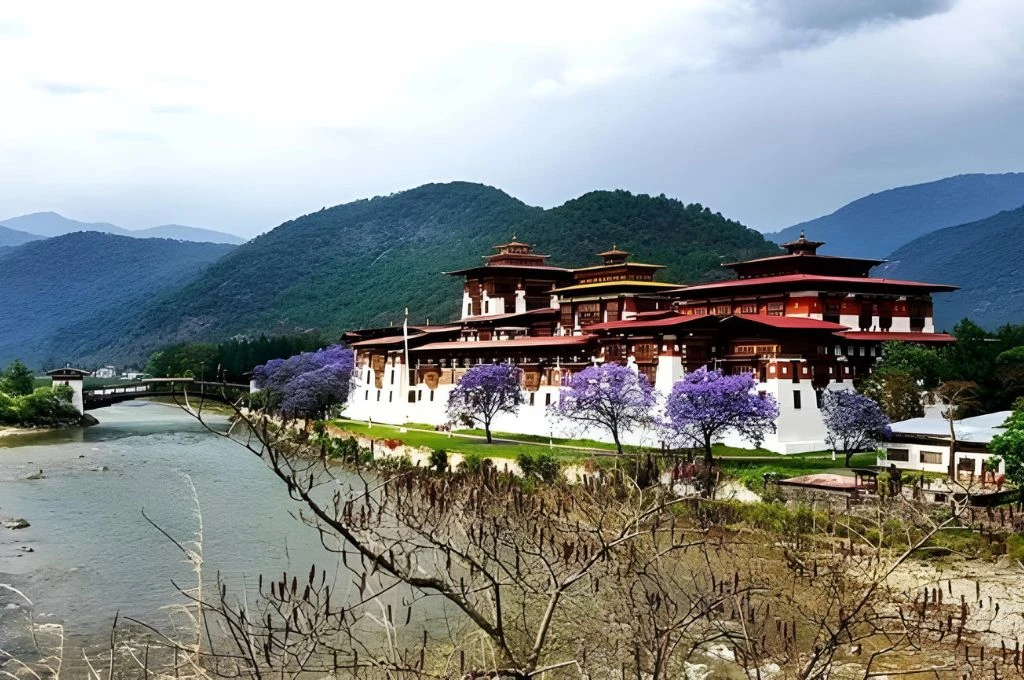
You can visit the Mountain Kingdom of Bhutan on a tour, which will show you its unique traditions, cultures, and natural sights. International tourists love to visit Bhutan, which is known as the “Land of the Thunder Dragon.” Bhutan is the last Buddhist Kingdom in the Himalayas. It is determined to keep its own identity even as it starts to interact with the rest of the world, whose people are friendly and follow the values of peace, tolerance, and nonviolence.
Bhutan is a small landlocked country in the Eastern Himalayas. It is in the middle of China and India, two very large countries. The White Mountains cover the northern part of the country. The southern part is made up of thick, dense jungles that haven’t changed much in hundreds of years. The people in this small but happy country are friendly and follow four main principles: good governance, a sustainable economy, protecting culture, and protecting the environment.
The tour of Bhutan begins in the city of Paro in Bhutan. There are many old monasteries and Dzong in the Paro valley, which is full of culture and traditions. Next, go to Thimpu, which is the capital of Bhutan, and see some of its ancient chortens, a nunnery, and the Trashichhoedzong, which is also known as the “fortress of the glorious religion.” Next, go to Punakha, which used to be Bhutan’s winter capital. On the way, you can see the Himalayan giants Masagang, Tsendagang, Terigang, Jejegangphugang, Kangphugang, Zongphugang, and the Gangkar puensum, which is Bhutan’s highest peak at 7,497 meters. After that, go to Punakha by crossing the Dochula pass, which is 3080 meters high and is in the Himalayas. Once you get to Punakha, visit the Ta Dzong and the Rinpung Dzong, which is another old monastic fortress.
Gallery
Itinerary
When you get close to Bhutan, you’ll see a beautiful view of the Himalayas. Your Bhutanese guide and a representative from the Alpine Club of Himalaya will meet you at Paro International Airport. After going through the immigration process, take a short drive to Thimpu. Through the Paro valley, you can see the silvery Pa Chu (also called the Paro River), which flows through a densely forested gorge, as well as the monastic fortress Paro Dzong and the watchtower Ta Dzong. In the late afternoon, you will go to Tashicho Dzong, a beautiful monastery and fortress that is home to the Secretariat building, the King’s Throne, and other government offices. It is also where the chief abbot or spiritual leader Je-Khenpo spends the summer. Next, go to the Handicrafts Emporium to see a wide range of beautiful hand-woven and crafted items, such as the well-known traditional thangka paintings. Then, walk towards the memorial Chorten, a pretty stupa that was built to honour Bhutan’s third King. The paintings and statues inside the monument show a lot about Buddhist thought.

Max. Altitude:
2334 m

Hotel

Meal
Breakfast, lunch, and dinner
In the morning, go to Punakha, which used to be Bhutan’s winter capital. Visit Trashi Chhoe Dzong, a beautiful mediaeval monastery and fortress that is home to most of the government offices and the King’s Throne room. It is also where the Chief Abbot, Je Khenpo, spends the summer. Then go to the National Library, which has a huge collection of old Buddhist books and manuscripts. Then, take a drive to the Arts & Crafts School, which is known for its traditional Thangkha paintings. To the right you can see students at work making complicated patterns on fabric. After that, go to the Textile and Folk Heritage Museums to learn more about Bhutanese material culture and living traditions. After lunch, go to the Handicrafts Emporium to see a wide range of beautiful items that were woven or made by hand. Then, take a drive to Memorial Chorten, a stupa that was built to honour Bhutan’s Third King, who is often called the “Father of Modern Bhutan.” The statues and paintings inside this monument show a lot about Buddhist thought. Drive to Punakha through the Dochula pass in the late afternoon. From the pass, you can see, from left to right, Masagang (7,158 meters), Tsendagang (6,960 meters), Terigang (7,060 meters), Jejegangphugang (7,158 meters), Kangphugang (7,170 meters), Zongphugang (7,060 meters), a table mountain that rules the remote Lunana region, and finally Gangkar puensum (7,497 meters), Bhutan’s tallest peak. In the evening, go back to your lodging.
Max. Altitude:
2334 m
Hotel
Meal
Breakfast, lunch, and dinner
After breakfast, you will visit Punakha Dzong. It was built by Shabdrung Ngawang Namgyal in 1637 at the point where the Pho Chhu and Mo Chhu rivers meet to be the region’s religious and political hub. Punakha Dzong has been an important part of Bhutan’s history. The Dzong has been fully fixed up after being damaged by four terrible fires and an earthquake. Then take a drive to Wangdue Phodrang and see the Dzong and the market there. The Wangdue Phodrang district is also known for its bamboo goods, slate, and stone carvings. After lunch, take a short break at Dochula pass on the way to Paro. On the way, you should stop at Simtokha Dzong, which was built in 1627 and is the oldest fortress in the Kingdom. It is now home to the School for Buddhist Studies.
Max. Altitude:
2300 m
Hotel
Meal
Breakfast, lunch, and dinner
After breakfast, go on a trip to Taktsang Monastery, which is the most famous monastery in Bhutan. For this reason, the monastery is called “Tiger’s Nest.” Guru Rinpoche is said to have come here on the back of a tigress and meditated there. The trip to the monastery takes five hours all the way around. In the afternoon, go to Ta Dzong to see the National Museum of the Kingdom. It was built in 1967 as a watchtower and is now the country’s national museum. It has a fascinating collection of art, artefacts, thangka paintings, and Bhutan’s beautiful postage stamps. After that, take a short walk down the path to see Rinpung Dzong. It has a long and interesting history.
Max. Altitude:
2300 m
Hotel
Meal
Breakfast, lunch, and dinner
After an early breakfast at the hotel, you will drive to the Paro airport and then to Nepal. People think this flight over the beautiful Himalayas is one of the best in the world. As soon as you land in Kathmandu, go to your hotel. In the late evening, to mark the end of your trip to Bhutan, take part in a special dinner show.
You can get in touch with Alpine Club of Himalaya – Walk of the Himalaya if you have any questions or need help or more information about this trip or any other trip.
Max. Altitude:
Hotel
Meal