


Overview
Duration
16 Days

Country
Nepal

Maximum Altitude
6118

Group Size
Min 1 pax

Activities
Peak Climbing

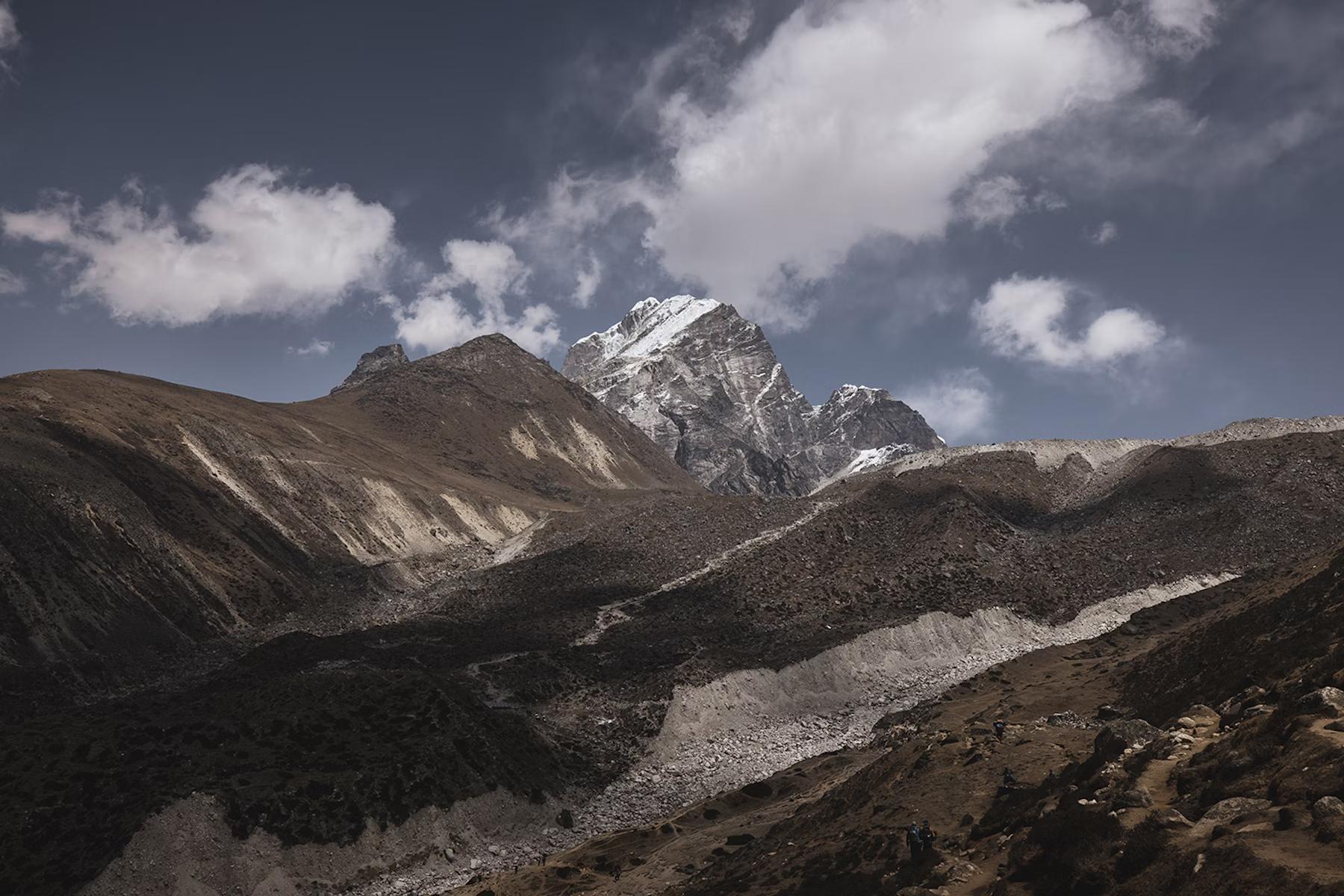
The Lobuche East Peak Climbing expedition is a well-known adventure in Nepal’s Khumbu Region. It offers a challenging yet rewarding experience in the heart of Nepal’s famous Everest region. Lobuche Peak is part of the Mahalangur range, which belongs to the greater Himalayan range. The area is protected by the Sagarmatha National Park, a UNESCO World Heritage Site, known for its rich biodiversity and ancient cultural heritage.
There are two summits on Lobuche Peak: Lobuche East and Lobuche West. While both are striking, Lobuche West is more difficult to climb due to its steeper and more technical terrain. In contrast, Lobuche East is comparatively more accessible but still demands strong physical endurance and mountaineering skills.
To successfully climb Lobuche East Peak, climbers must be physically and mentally fit. Knowledge of mountaineering techniques such as using fixed ropes, ladders, and crampons is essential. The journey begins with a scenic flight from Kathmandu to Lukla and follows the trail through charming Sherpa villages, ancient monasteries, and Namche Bazaar the gateway to Everest and a major trade hub.
Along the route, trekkers are treated to awe-inspiring views of the Himalayas, including Mount Everest, Thamserku, Khumbila, Konde Ri, Tawache, and many other peaks. The trail ascends gradually through various settlements until it reaches High Camp, where climbers undergo training and acclimatization in preparation for the summit push.
Reaching the summit of Lobuche East rewards climbers with panoramic views of some of the world’s highest mountains Everest, Lhotse, Makalu, Cho Oyu, and Ama Dablam among others. The descent takes you back through Pheriche, Namche Bazaar, and Lukla before returning to Kathmandu.
Lobuche East Peak Climbing is a unique opportunity to test your limits while soaking in the breathtaking landscapes and cultural richness of the Everest region. With proper planning, preparation, and support, this adventure can become a once-in-a-lifetime experience for both mountaineers and trekkers. Guided expeditions with the Alpine Club of Himalaya ensure a well-managed, safe, and enriching journey.
At Alpine Club of Himalaya, your safety is our top priority. We reserve the right to cancel or adjust the itinerary at any time if we believe your safety is at risk. Factors such as severe weather, natural disasters, health issues among team members, or other unforeseen conditions in remote mountain areas may necessitate changes to the plan. In such situations, we ask for your complete trust and cooperation with the group leader appointed by Alpine Club of Himalaya. Nonetheless, we are fully committed to sticking to the outlined itinerary whenever possible.
Itinerary
On the way to Nepal, the plane gives you stunning views of endless snow-capped peaks, lush green hills, and scattered villages. When you get to Tribhuvan International Airport, one of our staff members will help you find a place to stay. When you get to your lodging, take a short break. After that, take a walk around Kathmandu. The valley has many interesting cultural and natural sites. Check out some of the area’s old temples and stupas to learn about the people who lived there. In the late afternoon, you can join a meeting to learn about the trek. The people leading and guiding your group will give you important information about the trek. After the briefing, you and your team and guide will spend the evening at a welcome dinner.


Max. Altitude:
1400 m

Hotel

Meal
Welcome Dinner
Early in the morning, go to the domestic airport and catch a flight to Lukla. From the plane, you can see the snow-capped Himalayas and small towns spread out over lush, rolling hills. After a 45-minute flight, you’ll arrive at Lukla, a small town on top of a hill. In the middle of the 1960s, Sir Edmund Hillary and the Sherpas built the airstrip. Once you get to Lukla, take a short break, and then head towards the village of Phakding. After the trial, you will first reach Chauri Kharka, a beautiful settlement. From there, you can walk along the Dudh Koshi River to get to the settlement of Ghat, which is 2550 meters above sea level. Along the way, you can see Khumbila, a sacred peak that is one of the few peaks in the Khumbu region that hasn’t been climbed yet. You will reach Phakding, a small Sherpa town hidden in the green Dudh Koshi Valley, after a short walk. It is at an elevation of 2,610 meters.


Max. Altitude:
2800m
Hotel
Meal
Breakfast, Lunch, Dinner
Walk through a beautiful area of Rhododendron and Pine forests to start your walk after breakfast. After coming out of the canopy, you will walk along the Dudh Koshi River. After walking for about an hour, you’ll see the shining Mt. Thamserku (6,608m) on your right. Along the way, you’ll see pine, fir, and juniper forests. You may also catch a glimpse of Everest through the Lhotse-Nuptse ridge. As you walk along the trail, you’ll reach the entrance to Sagarmatha National Park. Once your permits are checked, you will need to climb up to get to Namche Bazaar. Along this part, you can see beautiful views of the mountains and landscapes. As soon as you get to Namche, go to your tea house. After that, go explore the area.


Max. Altitude:
3440m
Hotel
Meal
Breakfast, Lunch, Dinner
Today is the day for acclimatisation. As you climb higher, your body needs to get used to breathing in thinner air. The village has a number of great vantage points that are great for an acclimatisation hike. Anywhere you go before dawn, you can see the sunrise over the Himalayas, which is truly stunning. The sun’s rays change the snowy peak from white to different colours. Take in the views of Lhotse, Ama Dablam, Thamserku, Mount Everest, and other peaks. After lunch, go to Thami, a village that is above the Bhote Khola River Valley. The national park headquarters are above the village. You can get there by walking through the park’s lush forests. From here, you can see the Mahalangur range and the huge Mount Everest in all their glory. Check out the headquarters of the national park and learn about the Sherpa way of life, culture, and wildlife in the area. After exploring the area, go back to Namche and enjoy the beautiful views of the setting sun.

Max. Altitude:
3440 m
Hotel
Meal
Breakfast, Lunch, Dinner
From Namche, take the easy, level trail that goes around the ridge from Chhorkung to the end of a buffer zone. This will lead you to a view point with a wide view of mountains from Thamserku to Ama Dablam, Lhotse, and Everest.
From here, go towards Kyangjuma, which is 3,550 meters above sea level. After a short walk, you’ll reach an important trail junction at Sanasa, which is 3,600 meters above sea level. From here, take the trail that goes gently downhill towards the river and towards Tengboche. The trail then slowly goes down to Lawichasa, with Mt. Ama Dablam in the background. From Lawichasa, a narrow trail goes north to Tashinga. From there, the trail goes down on steep stone steps to Phunki Thenga, which is 3250 meters above sea level, and then to a suspension bridge. From the bridge, the trail goes up past some prayer wheels that are powered by water and starts a steady climb through a forest of tall, mature rhododendrons. By following the trail, you’ll get to the village of Tengboche. After settling in at your tea house, you should go to the well-known Tengboche monastery.


Max. Altitude:
3860 m
Hotel
Meal
Breakfast, Lunch, Dinner
The walk continued today on the upper trail, which had stunning views of an old monastery. The path went through a number of Chortens, Mani walls, and small towns. Along the way, you can see and enjoy amazing close-ups of Ama-Dablam. As you walk along the trail, the tracks take you under the skyscraping north face of Ama Dablam. You will get to the Imja Valley by following the trail. As the group got closer to where the Lobuche River meets the other rivers, the valley slowly became wider. After going down to the river, there is the last and steepest climb of the day, which leads to Dingboche. You will finally get to Pheriche after a short walk from here.

Max. Altitude:
4,240 m
Hotel
Meal
Breakfast, Lunch, Dinner
Today is your second day of getting used to the altitude. The settlement has a number of great spots for acclimatisation hikes. After breakfast, you can hike to any high point to see Lhotse, Makalu, Cho You, Cholatse, Taboche, and Lobuche West and East. Later, look around the settlement and take it easy while enjoying the beautiful views of the area.
Max. Altitude:
4240 m
Hotel
Meal
Breakfast, Lunch, Dinner
Start the walk after breakfast. Going through high mountainous terrain, head towards the village of Lobuche. You’ll pass through villages and see beautiful views of the land as you walk. As you rise, you’ll get your first look at Lobuche Peak. Next, follow the path along the glaciers to get to the settlement. When you get to the settlement, take it easy and rest because you will be going to the High Camp tomorrow.
Max. Altitude:
4910m
Hotel
Meal
Breakfast, Lunch, Dinner
You will be going to the Lobuche Base Camp today. Start the walk by going across the valley, then go up steep rocks. You can see the Lobuche Glacier, Ama Dablam, Cholatse, Pokalde, Thamserku, Kantega, and other mountain peaks as you walk along the trail. You can get to the Lobuche Base Camp by going across the moraine. Next, take a short break and then go to the High Camp. To get to the high camp, follow the rocky moraine. As soon as you get to camp, take it easy because your expedition starts tomorrow.

Max. Altitude:
5600 m
Hotel
Meal
Breakfast, Lunch, Dinner
Today is the first day of climbing. After that, different basic to advanced training. Once you reach the top of the mountain, you should go back to Base Camp and then to the village of Lobuche.

Max. Altitude:
6119 m
Hotel
Meal
Breakfast, Lunch, Dinner
Get up early to see the sunrise over the Himalayas. Start the walk after breakfast. You should go slowly today because most of the trail will go down. Along the trail, you’ll pass through a number of settlements and large alpine meadows. When you get to Pangboche, take a short break and then go out to explore the settlement. Talk to the people who live there and learn about their culture and way of life.

Max. Altitude:
4910 m
Hotel
Meal
Breakfast, Lunch, Dinner
Start the walk after breakfast. The trail for today will take you from high mountain country to the area’s lush forests. By going down the path, you can get to Namche Bazaar. After a short break, go for a walk around the settlement and check out the different pubs and restaurants in the area.
Max. Altitude:
3910 m
Hotel
Meal
Breakfast, Lunch, Dinner
Today is your last day of trekking. To get to Lukla, you should start by following the Dudh Koshi, which will take you past several settlements and monasteries. Take it easy and have fun on your last night in the mountains when you get to Lukla.

Max. Altitude:
3440 m
Hotel
Meal
Breakfast, Lunch, Dinner
There is a flight early in the morning from Lukla to Kathmandu. When you get there, you can check into your hotel. You have the rest of the day to do what you want. You could take a tour of the city with a guide or buy gifts for your family and friends.

Max. Altitude:
2800 m
Hotel
Meal
Breakfast, Lunch, Dinner
You are free to explore the city on your own today, or you can go with a guide who can show you all the best parts of the Kathmandu Valley. In the evening, there will be a special dinner to say goodbye to everyone who helped with the trip.


Max. Altitude:
1400 m
Hotel
Meal
Breakfast and farewell dinner
You will have free time today until your flight leaves. Someone from the Alpine Club of Himalaya will pick you up at the airport three hours before your flight. If you’d like to stay longer, you can talk to us about short tours like trips to national parks, rafting, mountain biking, Tibet, India, Bhutan, and more. The Alpine Club of Himalaya – Walk of the Himalaya is the place to go if you have any questions or need help or more information about this trip or any other trip.
Note that all of the above trekking times are estimates and should only be used as a general guide.


Max. Altitude:
Hotel
Meal